When Sardar Patel debunked the coerced ideology of ‘Ganga-Jamuni Tehzeeb’
June 26, 2026
  • Read Ecopy
  • Circulation
  • Advertise
  • Careers
  • About Us
  • Contact Us
Android AppiPhone AppArattai
Organiser
  • ‌
  • Bharat
    • Assam
    • Bihar
    • Chhattisgarh
    • Jharkhand
    • Maharashtra
    • View All States
  • World
    • Asia
    • Europe
    • North America
    • South America
    • Africa
    • Australia
  • Editorial
  • International
  • Opinion
  • RSS @ 100
  • More
    • Op Sindoor
    • Analysis
    • Sports
    • Defence
    • Politics
    • Business
    • Economy
    • Culture
    • Special Report
    • Sci & Tech
    • Entertainment
    • G20
    • Azadi Ka Amrit Mahotsav
    • Vocal4Local
    • Web Stories
    • Education
    • Employment
    • Books
    • Interviews
    • Travel
    • Law
    • Health
    • Obituary
  • Subscribe
    • Subscribe Print Edition
    • Subscribe Ecopy
    • Read Ecopy
  • ‌
  • Bharat
    • Assam
    • Bihar
    • Chhattisgarh
    • Jharkhand
    • Maharashtra
    • View All States
  • World
    • Asia
    • Europe
    • North America
    • South America
    • Africa
    • Australia
  • Editorial
  • International
  • Opinion
  • RSS @ 100
  • More
    • Op Sindoor
    • Analysis
    • Sports
    • Defence
    • Politics
    • Business
    • Economy
    • Culture
    • Special Report
    • Sci & Tech
    • Entertainment
    • G20
    • Azadi Ka Amrit Mahotsav
    • Vocal4Local
    • Web Stories
    • Education
    • Employment
    • Books
    • Interviews
    • Travel
    • Law
    • Health
    • Obituary
  • Subscribe
    • Subscribe Print Edition
    • Subscribe Ecopy
    • Read Ecopy
Organiser
  • Home
  • Bharat
  • World
  • Operation Sindoor
  • Editorial
  • Analysis
  • Opinion
  • Culture
  • Defence
  • International Edition
  • RSS @ 100
  • Magazine
  • Read Ecopy
Home Bharat

When Sardar Patel debunked the coerced ideology of ‘Ganga-Jamuni Tehzeeb’

Vedika ZnwarVedika Znwar
Oct 31, 2021, 12:01 am IST
in Bharat
Follow on Google News
FacebookTwitterWhatsAppTelegramEmail

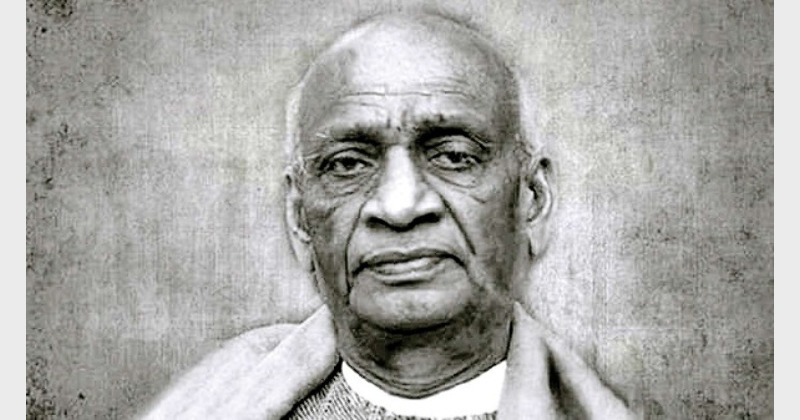
Sardar Vallabhbhai Patel in his iconic speech delivered at Kolkata in January 1948 busted the endured Nehruvian Secular state led Ganga- Jamuni Tehzeeb. One of the core tenets of the ideology of ‘Ganga-Jamuni Tehzeeb’ is that Indian Muslims in 1947 chose ‘secular India’ over the Islamic Republic of Pakistan. The word ‘chose’ here has completely changed the goal post. One of the serious repercussion is the birth of appeasement politics in India. 

All manners of minority appeasement is justified and whitewashing of Islamic radicalism is encouraged and even glorified. This obvious lie has permitted radical Islamic leaders to act upon their whims and get away unscathed. In the current backdrop, where Hindus and Muslims’ tensions are escalating, Vallabhbhai Patel’s perspective needs to be reiterated. Sardar Patel in his remarkable speech questioned a pertinent tangent regarding the concept and said, “The Muslims who are still in India, many of them helped in the creation of Pakistan. Has their nation changed overnight? I don’t understand how it changed so much.” He further went on and said, “I said one thing, you created Pakistan, good for you. They say that Pakistan and India should come together. I say please refrain from saying such things. Let Pakistan become heaven itself.” It wasn’t the only time that Sardar Patel would speak of Indian Muslims having loyalties towards Pakistan. 

His argument is still relevant in the current political situation. Does this makes him anti- Muslim? Was Patel ‘a total communalist’ as Nehru taunted him once? The answer is no. Political correctness was not Patel’s forte, honesty was. His intuitive discernment pierced through the guiles of those who would do India harm and laid bare their true intent. Viewed objectively, each of his ostensibly prejudiced actions is a natural act of humanitarian intervention. For example, his decision to order ‘police action’ against the Nizam’s Hyderabad in 1948 which earned him the title of ‘a total communalist’. It was in direct response to the reign of terror unleashed by the Razakars against the Hindus. Similarly, in 1950, when thousands of Hindu refugees poured into Calcutta from East Pakistan, Sardar Patel took up cudgels on their behalf and warned Pakistan. 

This resulted in the Liaquat-Nehru pact. The historical context here makes it clear where does this forced concept came into being. India’s freedom struggle was guided by the vision of Hindu nationalism and not by constitutional patriotism. The Congress brand of nationalism was but a subset of this broader Hindu nationalism with the Congress itself as the pre-eminent Hindu party. The Muslim question forced the Congress to adopt a more tempered language and symbolism later and to weave the myth of Hindu-Muslim unity. But it failed to prevent the Partition of India. The Congress was taken over by Left-leaning secular Page 1 denialists under Jawaharlal Nehru who, instead of confronting reality, pretended it did not exist. 

After centuries, Hindus were the dominant power. The misleading secular-communal debate blinded us to the obvious; the Republic of India is a Hindu reformist State. Hindu nationalism has never been fringe; it is Nehruvian secularism that was the fringe. And with the fall of the old English-speaking elites, the system they created is also collapsing along with accompanying myths like Ganga-Jamuni Tehzeeb and Hindu-Muslim unity. In the name of secularism, the wolf has worn the skin of the sheep, thus the predator has adopted eternal victimhood. 

The story always is about Indian Muslims stayed back in India out of choice, allegiance and love for India and thus, casting aspersions on their patriotism or even their “tolerance” of the Hindu faith is unfair. Even as the threats by Muslims threw thick and fast, the narrative that was peddled was that “secular” India was being unfair to Muslims. This hypocrisy is a concrete evidence of highlighting the selective side of the story according to the convenience of the circumstances. If the Muslims willingly stayed back in India, is it a favour on the Indian state? One of the most obvious question that arises is that if Muslims wanted a separate Islamic State and voted overwhelmingly in its favour, why did so many Muslims stay back? The argument made essentially made by the intelligentsia in order to defend is that 1946 elections, based on the Sixth Schedule of the1935 Government of India Act, had a limited franchise, which means that only a small percentage of adults those with money and property were eligible to vote.

Why did the complete transfer of the population did not happen, when several political stalwarts were in favour. Essentially, Jawaharlal Nehru scuttled the de facto population exchange with the 1950 Accord. After the Accord was signed, Muslims, who had left West Bengal, returned and Nehru ensured that their property was restored to them. However, the travesties heaped on the Hindus continue to this day, unabated in Islamic Nations like Pakistan and Bangladesh. Is it the Hindu ‘majority’ who unleashed atrocities on the ‘minority’? The evidences are indicating otherwise.

Partition was solely done on the basis of RELIGION! as the two entities were unable to coexist, happen to have different set of ideologies, social customs, upbringing and literature, et al. This itself questions the veracity and the relevance of the Ganga-Jamuni Tehzeeb. Vallabhbhai Patel was a true nationalist who was candid and clear on his thoughts. He was pragmatic about the Hindu-Muslim issue. He knew the ground-reality and was not shy to confront them, thus by questioning the so-called Hindu-Muslim unity, a prism on which the Nehruvian Secularism propagates the agenda is finally exposed.  
 

ShareTweetSendShareSend
✮ Subscribe Organiser YouTube Channel. ✮
✮ Join Organiser's WhatsApp channel for Nationalist views beyond the news. ✮
Previous News

PM Modi meets US President Biden, other world leaders at G20 Rome Summit

Next News

Diwali, Crackers and Pollution – Truth uncovered! Part 4 – Precautionary Principle Paradox

Related News

Y.D. Manjunath, Additional Excise Commissioner and brother-in-law of Karnataka PWD Minister Satish Jarkiholi

ED raids Karnataka Excise Dept officials: Rs 13.3 Cr seized, Minister Satish Jarkiholi’s brother-in-law under scanner

Former -DMK Minister EV Velu (File Photo)

Tamil Nadu: Anti-graft agency raids 13 locations linked to ex-DMK Minister EV Velu over alleged contract irregularities

Government introduces AIR SUVIDHA portal following WHO Ebola emergency for international travellers

The Emergency: India’s darkest chapter, the struggle for democracy and the ban on the RSS

Exposing Western Media’s Climate Hypocrisy: When Europe burns it’s just weather, When India heats up it’s a crisis

Rahul Gandhi’s 2018 Panama Papers Remark: Congress leader apologetic in MP High Court, but political fallout continues

Load More

Latest News

Y.D. Manjunath, Additional Excise Commissioner and brother-in-law of Karnataka PWD Minister Satish Jarkiholi

ED raids Karnataka Excise Dept officials: Rs 13.3 Cr seized, Minister Satish Jarkiholi’s brother-in-law under scanner

Former -DMK Minister EV Velu (File Photo)

Tamil Nadu: Anti-graft agency raids 13 locations linked to ex-DMK Minister EV Velu over alleged contract irregularities

Government introduces AIR SUVIDHA portal following WHO Ebola emergency for international travellers

The Emergency: India’s darkest chapter, the struggle for democracy and the ban on the RSS

Exposing Western Media’s Climate Hypocrisy: When Europe burns it’s just weather, When India heats up it’s a crisis

Rahul Gandhi’s 2018 Panama Papers Remark: Congress leader apologetic in MP High Court, but political fallout continues

UP Govt orders audit of various coaching centres that are illegally constructed

Lucknow Coaching Fire: UP CM Yogi Adityanath orders statewide fire safety audit, forms special teams across districts

India’s education debate needs clarity, not noise

Scuffle at the Tiruvananthapuram Municipal Corporation on June 25

Keralam: Nine BJP councillors injured as CPM protest demanding Mayor’s resignation turns violent at Thiruvananthapuram

India's textile ambitions are being woven through local manufacturing strengths, innovation, sustainability and an expanding global trade footprint

National Textile Export Roadmap 2030: India’s strategic push for a $100 billion global textile presence

Load More
  • Privacy
  • Terms
  • Cookie Policy
  • Refund and Cancellation
  • Delivery and Shipping

© Bharat Prakashan (Delhi) Limited.
Tech-enabled by Ananthapuri Technologies

  • Home
  • Search Organiser
  • Bharat
    • Assam
    • Bihar
    • Chhattisgarh
    • Jharkhand
    • Maharashtra
    • View All States
  • World
    • Asia
    • Africa
    • North America
    • South America
    • Europe
    • Australia
  • Editorial
  • Operation Sindoor
  • Opinion
  • Analysis
  • Defence
  • Culture
  • Sports
  • Business
  • RSS @ 100
  • Entertainment
  • More ..
    • Sci & Tech
    • Vocal4Local
    • Special Report
    • Education
    • Employment
    • Books
    • Interviews
    • Travel
    • Health
    • Politics
    • Law
    • Economy
    • Obituary
  • Subscribe Magazine
  • Read Ecopy
  • Advertise
  • Circulation
  • Careers
  • About Us
  • Contact Us
  • Policies & Terms
    • Privacy Policy
    • Cookie Policy
    • Refund and Cancellation
    • Terms of Use

© Bharat Prakashan (Delhi) Limited.
Tech-enabled by Ananthapuri Technologies