– Ananth Seth
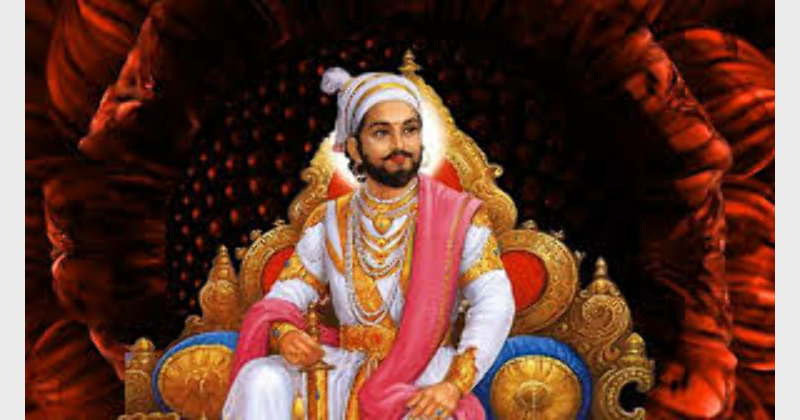
It was on Jyeshta Shukla Thrayodashi of 1674 CE that Chhatrapati Shivaji Maharaj was coronated. This tithi is celebrated as Hindu Samrajya Divas by Sangh Parivaar. Though there had been many previous efforts by kings, social reformers, saints, administrators et al to materialize and consolidate the idea of ‘Hindu Rashtra’, none achieved sustained and definable success. It was the coronation of Shivaji and his idea of ‘Hindavi Swaraj’ that brought forth the successful culmination of all the previous endeavors aimed towards the idea of ‘Hindu Samrajya’. Contemporary British writers compared Shivaji with Alexander, Hannibal and Julius Caesar. In his book Rise of the Maratha Power, Mahadev Govind Ranade, one of the founding fathers of Indian National Congress, declared Shivaji’s achievements as the beginning of modern nation building.
Chhatrapati Shivaji Maharaj was one of the most glorious martial sons of Mother India. He was the founder of the powerful Maratha empire, his guerilla warfare rattled the Mughals and Adil Shahis, he had one of the best naval forces of those days and he was in possession of about 300 Forts at the time of his death in 1680 CE. Notwithstanding his military exploits, Shivaji was an effective administrator too who provided a benevolent and effective system of governance. He took special care to make his administrative system responsive to the needs of the people. In the words of Dr. Ishwari Prasad, “The institutions which he established were an improvement upon the existing order and were well adapted to the well-being of his subjects”. HG Rawlinson, the author of Shivaji the Maratha: His Life and Times, had said “Like all great warriors – Napoléon is a conspicuous example – Shivaji was also a great administrator, for the qualities which go to make a capable general are those which are required by the successful organizer and statesman.”
The Ashta Pradhans
(Image Courtesy: MaharashtraNama)
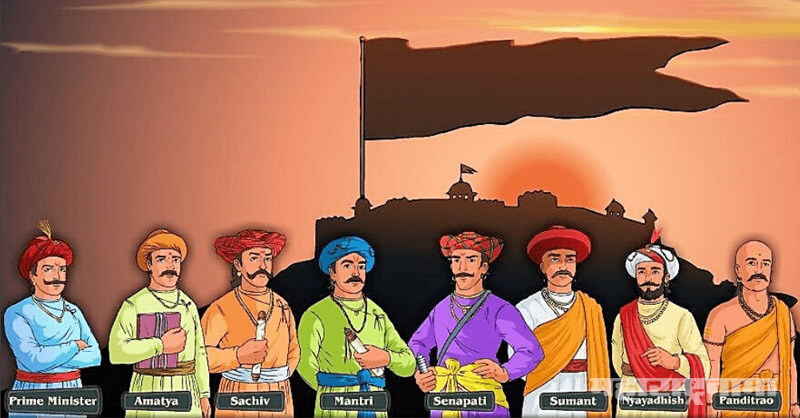
Despite being the Supreme head of his government who could do what he desired, Shivaji chose to be advised by a council of eight ministers whom he called the Ashta Pradhans. These eight ministers had Sanskritized titles and their functions were purely advisory. The ministers, however, did not form a cabinet in the modern sense of the term for they were responsible to Shivaji alone, who appointed and dismissed them at will. But he delegated much of the administrative matters in their hands and except in matters of formulation of policy, he seldom interfered with their work. Nevertheless, the function of the ministers was purely advisory.
Among the ministers, the Peshwa enjoyed a higher status and royal confidence. However, the Peshwa did not have supremacy over his colleagues. The Prime Minister or Peshwa, officially known as Mukhya Pradhan, was responsible for the general administration and welfare of the kingdom and therefore, his main duties were to control other officers and promote harmony in the administration. He represented the King in his absence and put his seal below the King’s to all royal letters and dispatches.
Other ministers held departmental charges such as Finance, Correspondence Foreign Affairs, Army and so forth. The Amatya (Finance Minister) checked all accounts of income and expenditure. The chronicler or the Mantri was in charge of compiling a daily record of the king’s activities and the court’s proceedings; he had to keep a watch over invitation lists, meals, etcetera, so as to guard against plots. The Sachiva was in-charge of the correspondence and his duty was to see that all royal letters and dispatches were drafted in the proper style. Samant (the Foreign Secretary) helped the king on matters relating to foreign states and on problems of war and peace. Samant also had to receive foreign ambassadors and envoys and to keep in touch with the activities of other powers.
The Home Minister Waqia-Navis managed internal affairs especially intelligence and espionage. The Senapati (the Commander-in-Chief) looked after the recruitment, organization and discipline of the army. He had also to arrange for the disposition of the troops on the fields of battle. The spiritual head Pandit Rao decided the religious cases and disbursed grants to religious and learned men; his main duties were to fix dates for religious ceremonies, to punish heresy and to disburse among the Brahmans, the money set apart by the king for charity. Pandit Rao was also the judge of canon law, Royal Almanac and Censor of Public Morals.
The Nyaayadheesha was the highest judge in the kingdom and responsible for civil and military justice and for endorsing judicial decisions regarding rights of lands, village headship, etc. The offices of the ministers were not hereditary but depended upon the personal qualities of a person and consent of the king. All the ministers except the Spiritual Head and the Chief Justice were required to command armies and lead expeditions.
Local Administration
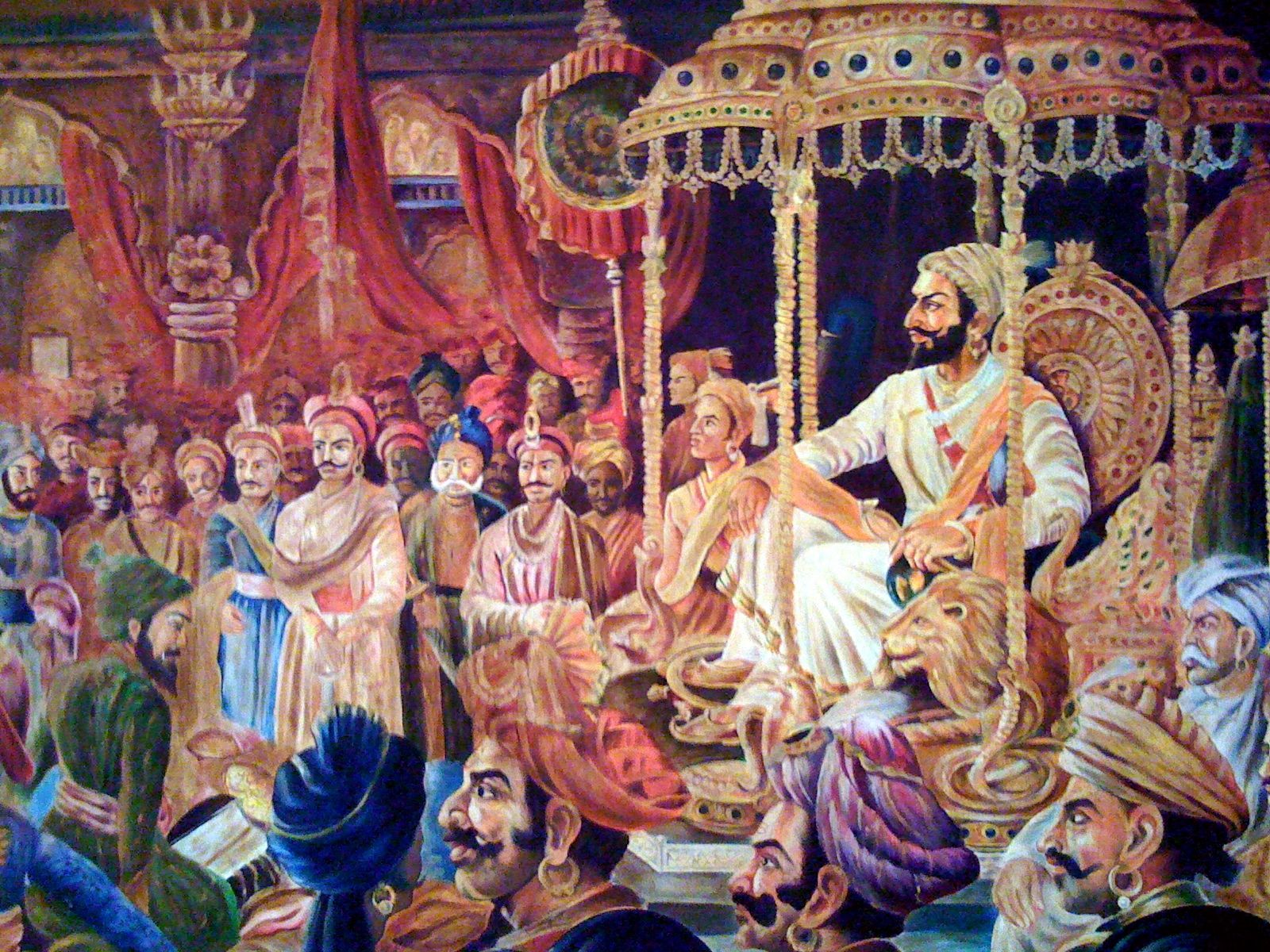
For convenience and efficiency, Shivaji divided his kingdom into four provinces. The provinces were divided into a number of regions called prants. Each prant was subdivided into parganas and tarafs. The village was the lowest unit of administration, run by the village headman known as Patel. The Patel carried on his duties with the help of the gram Panchayat, whose members were elected by the villagers. Each province was under the charge of a Subedar or Mamlatdar, who was helped by a number of other officers.
Revenue and Economic Administration
In Shivaji’s Revenue System, assessment was made after a careful survey and classification of the lands according to their quality and yield. The procedure entailed a careful survey of the land after which the share of the state was fixed at 30 percent of the produce. Later when other taxes were abolished, the state’s share was increased to 40 percent. The cultivator was at liberty to pay either in cash or kind, according to his own convenience and will. The amount of money to be paid to the state was fixed, which meant that there was not much scope for tax collectors to oppress the peasantry. The accounts of the revenue collectors were carefully examined by the officers.
The state’s policy was such that it promoted and encouraged agricultural activities by helping peasants through the advancement of money or grain. Shivaji was strict in the collection of land revenue and adequate steps were taken to ensure that no favoritism or oppression took place. Shivaji’s revenue system was beneficent and based on humane considerations. Loans, or the takavi, were advanced to agriculturists by the state for the purchase of cattle and seeds. They were repayable in easy installments. Extension of cultivation was encouraged by greatly reducing the tax upon lands newly brought under cultivation. Tax was raised in gradual stages in such a way that the maximum amount was reached over a period of eight years. He abolished the jagir system because it encouraged the spirit of revolt. He discouraged Zamindari system and established direct connection with the cultivators.
Shivaji also started the system of Chauth and Sardeshmukhi. Chauth is a kind of tax (25 percent of gross revenue) to be paid by hostile or alien states to Maratha Officers called Jagirdars, for protection of the paying state from Maratha raids. Sardeshmukhi was a 10 percent levy imposed on Chauth to assert the Maratha overlordship derived from hereditary rights.
Judicial Administration
The panchayats settled disputes in the villages and a common form of punishment was the trial by ordeal. Criminal cases were tried by the village headman or Patel. At the imperial level, the Nyaayadheesh heard appeals in both civil and criminal cases.
Forts’ Administration
The people were taught to regard the fort as their mother as indeed it was for thither the inhabitants of the surrounding village resorted in time of invasions. There were about 300 forts in his territory. Each fort was in-charge of three officers of equal rank. They acted together and served as a check on one another. This was done so that forts may not be given to enemy by any one officer.
Navy Administration
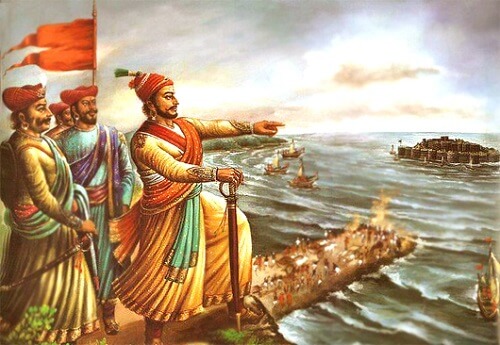
Shivaji realized the importance of having a navy. His enterprises in Konkan were often hampered by the hostility of the Abyssinian pirates (siddis), who were established at Janjire, a small Island to the south of Bombay. The siddis were fine seamen and good fighters. Shivaji wanted to destroy their power and so built a considerable fleet manned by the sea-faring people of the Malabar coast. Ten years of fighting with the siddis followed and the Maratha fleet on the whole gave a good account of itself.
From the analysis of the administrative systems prevailing in Maratha Empire it could be stated that central government was only the apparition of the ruling king. The King was the law maker, the highest administrator, the Supreme commander of the army and the highest Judicial authority in the state. Yet the king was guided by the Ashta Pradhan who looked after the welfare of their subjects as defined by Dharma.
(Author is a practising advocate based in Hyderabad)