Ensuring security beyond borders: How Modi?s anti-satellite test made the fourth & fifth frontiers safe
July 24, 2026
  • Read Ecopy
  • Circulation
  • Advertise
  • Careers
  • About Us
  • Contact Us
Android AppiPhone AppArattai
Organiser
  • ‌
  • Bharat
    • Assam
    • Bihar
    • Chhattisgarh
    • Jharkhand
    • Maharashtra
    • View All States
  • World
    • Asia
    • Europe
    • North America
    • South America
    • Africa
    • Australia
  • Editorial
  • International
  • Opinion
  • RSS @ 100
  • More
    • Op Sindoor
    • Analysis
    • Sports
    • Defence
    • Politics
    • Business
    • Economy
    • Culture
    • Special Report
    • Sci & Tech
    • Entertainment
    • G20
    • Azadi Ka Amrit Mahotsav
    • Vocal4Local
    • Web Stories
    • Education
    • Employment
    • Books
    • Interviews
    • Travel
    • Law
    • Health
    • Obituary
  • Subscribe
    • Subscribe Print Edition
    • Subscribe Ecopy
    • Read Ecopy
  • ‌
  • Bharat
    • Assam
    • Bihar
    • Chhattisgarh
    • Jharkhand
    • Maharashtra
    • View All States
  • World
    • Asia
    • Europe
    • North America
    • South America
    • Africa
    • Australia
  • Editorial
  • International
  • Opinion
  • RSS @ 100
  • More
    • Op Sindoor
    • Analysis
    • Sports
    • Defence
    • Politics
    • Business
    • Economy
    • Culture
    • Special Report
    • Sci & Tech
    • Entertainment
    • G20
    • Azadi Ka Amrit Mahotsav
    • Vocal4Local
    • Web Stories
    • Education
    • Employment
    • Books
    • Interviews
    • Travel
    • Law
    • Health
    • Obituary
  • Subscribe
    • Subscribe Print Edition
    • Subscribe Ecopy
    • Read Ecopy
Organiser
  • Home
  • Bharat
  • World
  • Operation Sindoor
  • Editorial
  • Analysis
  • Opinion
  • Culture
  • Defence
  • International Edition
  • RSS @ 100
  • Magazine
  • Read Ecopy
Home Bharat

Ensuring security beyond borders: How Modi?s anti-satellite test made the fourth & fifth frontiers safe

By shooting down a satellite that was reportedly hurling at a speed of 27,000 km/hour, India has displayed that it can now disrupt a country?s surveillance, navigation and communication capability ? the key ingredients of any battlefield scenario

Archive ManagerArchive Manager
Mar 28, 2019, 07:56 pm IST
in Bharat
Follow on Google News
FacebookTwitterWhatsAppTelegramEmail


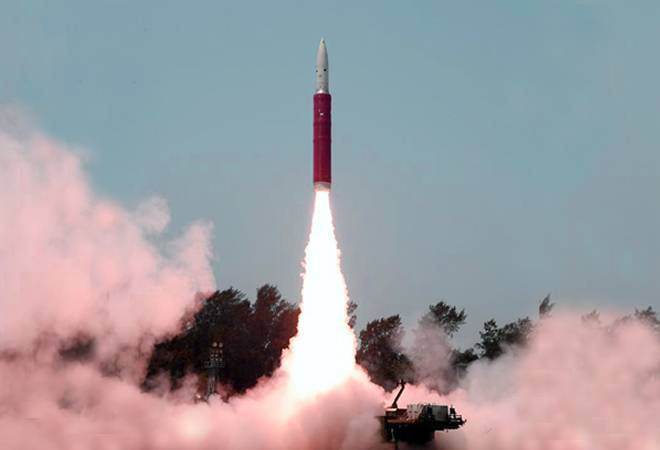
DRDO successfully conducted Anti-Satellite Missile Test from APJ Abdul Kalam Island in Odisha on Wednesday
 
Dr Swadesh Singh
At around 11 am on March 27, scientists at Defence Research Development Organisation (DRDO) launched an 18tonne interceptor missile from Balasore range in Odisha. Three minutes later the missile destroyed a 740kg live satellite Microsat-R at an altitude of 274km, pushing India into the elite club of nations that have the capability to strike live targets in space. India – that had been struggling for years to establish itself as a regional power – thereby established itself as a space superpower in one stroke.
 
This landmark test, nicknamed ‘Operation Shakti’ is crucial at a time when the country has entered the information age where knowledge and communication have become the key to everything. The rapid expansion of technology has blurred the importance of physical boundaries. In fact, there has been a ‘death of distance’ making strategic issues more and more reliant on technology, and space and cyberspace emerging as the fourth and fifth dimensions of defence. There are reportedly 320 military satellites operating around the earth, out of which India has only two while China has 35 and US has 140. By displaying this capability, India has sent out a clear message to the world that its space objects are not to be messed with and that it has the ability to target any malignant satellites.
 
This has been compared to the Pokhran tests in 1998 when Prime Minister Atal Bihari Vajpayee had shown the political will to test the capability India already had. The ‘SatKill’ test of 2019 is similar in many ways. Here too the country’s scientists had developed the capability years ago but the political leadership did not find the courage to go ahead until Prime Minister Narendra Mod came to power. The project was one of the several long-term critical projects listed as priority by the Modi government and the decision to go ahead with it had been taken in 2014 itself. A team of 300 DRDO scientists started working on the project two years ago and had been working on mission mode for the last six months to make the operation a success.
 
Pokhran II had also pushed India into the elite club of countries with nuclear deterrence capability. Though at that time India braved a huge international fallout as the group of nuclear suppliers and non-proliferation signatories stood against us. In the current scenario, even as India tested its anti-satellite capabilities, a meeting was underway in Geneva to draft rules on Prevention of Arms Race in Outer Space. A demonstration of capability was crucial to find a place in such a group that gets to decide the rules. This time the government decided not to miss the bus and went ahead with the test.
 
Despite its robust space programme, successive Indian governments have been hesitant about stepping into the space game. However, with this decisive and bold step by Prime Minister Narendra Modi, that has changed. The ASAT (Anti-Satellite missile Test) is also expected to add massively to the country’s ability to take on high-altitude missiles. While the Prime Minister stated in unequivocal terms that this was a purely defence capability and not intended at creating an arms race, the comparisons with China are unavoidable. China, reportedly, has a dedicated force for space and cyberspace operations and is looking towards setting up a “space station with military applications”. The Narendra Modi government has also set up a tri-services Defence Space Agency to step up to the challenge. However, unlike China, India did not forget its responsibility to the environment in pursuit of its strategic interests. The missile test of Wednesday was done at less than 300km despite having the capability to reach up to 1000km to prevent space debris.
 
By shooting down a satellite that was reportedly hurling at a speed of 27,000km/hour, India has displayed that it can now disrupt a country’s surveillance, navigation and communication capability – the key ingredients of any battlefield scenario. The Modi government has reassured Indians, once again, that they are safe and prepared to face any challenge.
 
(The writer is Assistant Professor, Delhi University)

Courtesy: Academics 4 Namo



ShareTweetSendShareSend
✮ Subscribe Organiser YouTube Channel. ✮
✮ Join Organiser's WhatsApp channel for Nationalist views beyond the news. ✮
Previous News

Readers? Forum

Next News

Kerala BJP Lok Sabha candidate KP Prakash Babu remanded to police custody for 14 days in Sabarimala case

Related News

Congress Leader Rahul Gandhi and Prime Minister Narendra Modi

Fact Check | NEET Paper Leak: Rebuttal on Rahul Gandhi’s press conference & debunking fake allegations

Nihang Sikhs Demand Apology from Abhijeet Dipke for insulting them

Clashes erupt at Jantar Mantar as Nihang Sikhs confront CJP, demands apology from Abhijeet Dipke for demeaning them

Dr Vrushali Joshi, All India Organising Secretary of Vishvamangalya Sabha

Interview| ‘Motherhood is central to nation-building’: Dr Vrushali Joshi explains Yuganukul Matrutva

Representative Image

Zohran Mamdani and the Politics of the Ummah: From Anti-India rhetoric to the demand for Netanyahu’s arrest

Representative Image

Why loan planning should be part of your annual financial goals

India has risen from a negligible solar player to the world's third-largest solar market, driven by rapid clean energy growth

From Zero to Third: How India emerged as the world’s third-largest solar power nation in just two decades

Load More

Latest News

Congress Leader Rahul Gandhi and Prime Minister Narendra Modi

Fact Check | NEET Paper Leak: Rebuttal on Rahul Gandhi’s press conference & debunking fake allegations

Nihang Sikhs Demand Apology from Abhijeet Dipke for insulting them

Clashes erupt at Jantar Mantar as Nihang Sikhs confront CJP, demands apology from Abhijeet Dipke for demeaning them

Dr Vrushali Joshi, All India Organising Secretary of Vishvamangalya Sabha

Interview| ‘Motherhood is central to nation-building’: Dr Vrushali Joshi explains Yuganukul Matrutva

Representative Image

Zohran Mamdani and the Politics of the Ummah: From Anti-India rhetoric to the demand for Netanyahu’s arrest

Representative Image

Why loan planning should be part of your annual financial goals

India has risen from a negligible solar player to the world's third-largest solar market, driven by rapid clean energy growth

From Zero to Third: How India emerged as the world’s third-largest solar power nation in just two decades

India diversifies its rare earth sourcing through deeper cooperation with Myanmar

India–Myanmar bilateral collaboration on rare earth gains momentum amid China’s export controls

Tarun Vijay presents copy of his book 'Saffron Surge' to RSS Sarsanghchalak Dr Mohan Bhagwat

Tarun Vijay Presents his Book ‘Saffron Surge’ to RSS Sarsanghchalak Dr Mohan Bhagwat in Delhi

Prajna Pravah Akhil Bharatiya Sah Sanyojak Chandrakant Ji at a lecture at Mohanlal Sukhadia University

“Bharatiya perspective is essential in research for Bharat’s resurgence”: Chandrakant Ji, Prajna Pravah Sah Sanyojak

Free Wi-Fi is being set up at Delhi’s Jantar Mantar protest site, allowing protesters to stay connected amid mobile internet restrictions

CJP Protest Gets ‘VIP’ Internet? Free Wi-Fi at Jantar Mantar as Delhi mobile services stay suspended amid violence

Load More
  • Privacy
  • Terms
  • Cookie Policy
  • Refund and Cancellation
  • Delivery and Shipping

© Bharat Prakashan (Delhi) Limited.
Tech-enabled by Ananthapuri Technologies

  • Home
  • Search Organiser
  • Bharat
    • Assam
    • Bihar
    • Chhattisgarh
    • Jharkhand
    • Maharashtra
    • View All States
  • World
    • Asia
    • Africa
    • North America
    • South America
    • Europe
    • Australia
  • Editorial
  • Operation Sindoor
  • Opinion
  • Analysis
  • Defence
  • Culture
  • Sports
  • Business
  • RSS @ 100
  • Entertainment
  • More ..
    • Sci & Tech
    • Vocal4Local
    • Special Report
    • Education
    • Employment
    • Books
    • Interviews
    • Travel
    • Health
    • Politics
    • Law
    • Economy
    • Obituary
  • Subscribe Magazine
  • Read Ecopy
  • Advertise
  • Circulation
  • Careers
  • About Us
  • Contact Us
  • Policies & Terms
    • Privacy Policy
    • Cookie Policy
    • Refund and Cancellation
    • Terms of Use

© Bharat Prakashan (Delhi) Limited.
Tech-enabled by Ananthapuri Technologies