The political landscape in Jharkhand has been marked by instability and frequent leadership changes, transitioning from Babulal Marandi of the Bharatiya Janata Party (BJP) to Shibu Soren and currently Hemant Soren of Jharkhand Mukti Morcha (JMM). Since the creation of Jharkhand in 2000, JMM has predominantly governed the State. Raghubar Das remains the only Chief Minister to have completed a full term, underscoring the volatility that has hindered the State’s progress. Even after two decades of political dominance, fundamental infrastructure like electricity, roads, water supply, hospitals, and schools remain inaccessible to most of the villages of Jharkhand.
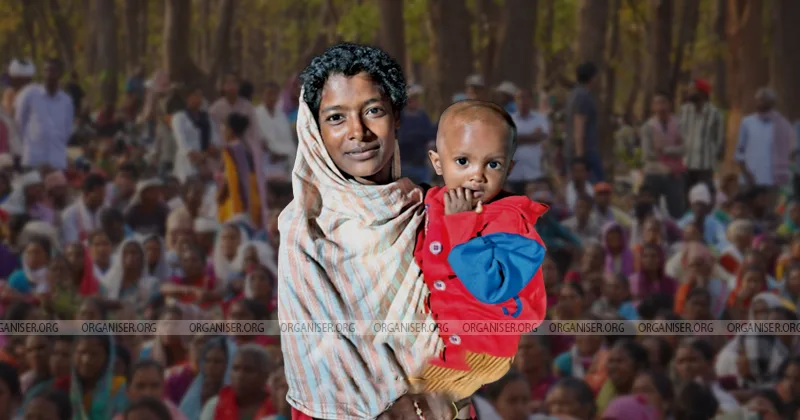
The State, founded on the principles of protecting jal, jungle, jameen (water, forests, and land), now faces a growing concern among its tribal communities. Amid the issues of development, job creation, migration and corruption, there is a palpable fear among the Vanvasis of losing their cultural identity and control over their ancestral lands, as promises of safeguarding these vital resources remain unfulfilled.
The Political Showdown
The elections in Jharkhand have become a direct showdown between BJP and JMM, with both parties setting distinct narratives. The BJP is championing Tribal identity with its campaign slogan Roti, Maati, Beti (bread, soil, and daughters), aiming to address basic needs and Tribal pride. On the other hand, the JMM is rallying for continuity with its slogan “Hemant Dobara” (Hemant Again), hoping to capitalise on the incumbency of Chief Minister Hemant Soren.
Organiser team on ground navigated the complex political terrain of the State to capture the pulse of the electorate. The stakes of this election go beyond just winning seats; they touch on deep-seated issues that have long plagued the region.
Bangladeshi Infiltration: A Growing Concern
A significant issue dominating this election is the alleged infiltration of illegal Bangladeshi migrants, a topic that the BJP has vigorously highlighted. Party leaders, both at the State and grassroots levels, have raised concerns about what they describe as a systematic and organised settlement of illegal Bangladeshi immigrants, especially in the Santhal Pargana region. This area, which includes districts like Sahibganj, Pakur, Dumka, Godda, and Deoghar, has seen a noticeable demographic shift, according to the BJP.
BJP accuses the JMM of facilitating this migration by supporting these settlers as a growing voter base. BJP also alleges that these infiltrators initially settle on the outskirts of Tribal villages, often marrying local women to gain land rights and eventually secure permanent residency. BJP, in its manifesto, has promised to take strict measures against what it terms “Ghuspaithiyas,” or illegal settlers, and eliminate the so-called “Jamai Tolas,” areas where these migrants have established strongholds.
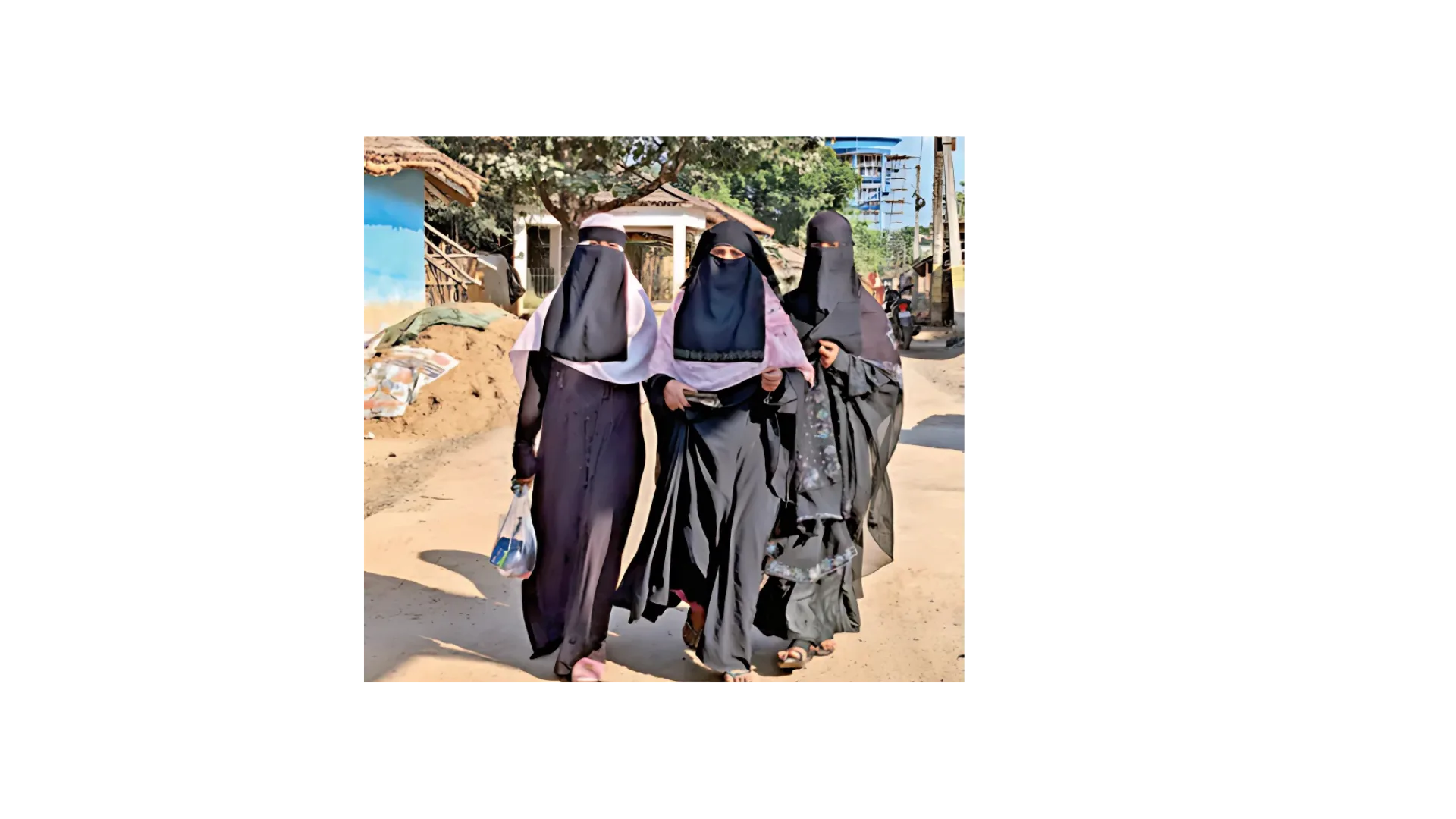
Organiser team visited several parts of the Santhal Pargana, focusing on the Rajmahal region in Sahibganj district. The observations were stark: large villages with populations exceeding 10,000 had very few, if any, Hindu households. Instead, rows of mosques lined the streets, and Muslim settlements stretched across multiple villages, creating an atmosphere distinct from other parts of Jharkhand.
In villages like Udhiya, Mansingha, Piyarpur, Uttar Palasgachi, and Patola Jheel, similar patterns were noted. For instance, Uttar Palasgachi, home to approximately 11,000 Muslims, has only 35 remaining Hindu families. Over a seven-kilometer stretch, no Hindu households were visible, while mosques and madrasas appeared at frequent intervals. Local Hindus reported various forms of social pressure and discrimination, including being charged a “tax” to fish in the Ganga, being forced to halt music during the five daily calls to prayer (azan), and even facing physical threats if they resisted.
Rajkumar Choudhary, a local, articulated his frustration about the growing influx of outsiders. “These are not Muslims of Bharat,” he remarked. “Most have come from outside. Every month, new people arrive, causing their population to increase while ours remains unchanged.”
The ‘Jamai Tola’ Saga
Another phenomenon, known as “Jamai Tola,” has become a focal point in this demographic shift. To explore this issue, we visited Barhait village in Pakur district, where Monika Kisku serves as the Chairman of the Barhait Zila Parishad. Seven years ago, Kisku married Umed Ali Ansari, a local Muslim man. Following his death during the COVID-19 pandemic, she remarried his brother, Ejaz Ansari, but continues to hold her political position.
When our team attempted to speak with Kisku, her family declined to comment on camera. However, Abdul, a local villager, provided insight into this practice. “We marry Tribal women so that we can buy land and contest elections,” he explained. “The seats are reserved for them, and they hold the rights to buy and sell land. What else are we supposed to do?”
A ‘Leak’ In Jharkhand’s Education System
The scandal surrounding the leak of exam papers has severely tarnished Jharkhand’s reputation, raising serious concerns about the credibility of State-level exams.
The controversy has put the JMM Government under intense scrutiny, with critics arguing that its failure to maintain the integrity of competitive exams reflects a deeper disregard for educational security. Persistent irregularities, particularly in exams conducted by the Jharkhand Staff Selection Commission (JSSC), have raised doubts about the Government’s commitment to transparency and fair governance. As accusations of negligence and corruption swirl, the State’s youth are left questioning whether their hard work can truly pay off in such a compromised system.
Ritika Thakur, a first-year Mass Communication student at Ranchi University, expressed disillusionment felt by many aspiring young candidates. “Months of hard work, sleepless nights, and the hopes of our families—all wasted because the Hemant Government allegedly sells exam papers for a few crores,” she lamented. Ritika accused the JMM-led administration of funding its pre-election “freebies” through corrupt practices, including the profits from leaked examination papers.
Developmental Gaps: A Legacy of Neglect
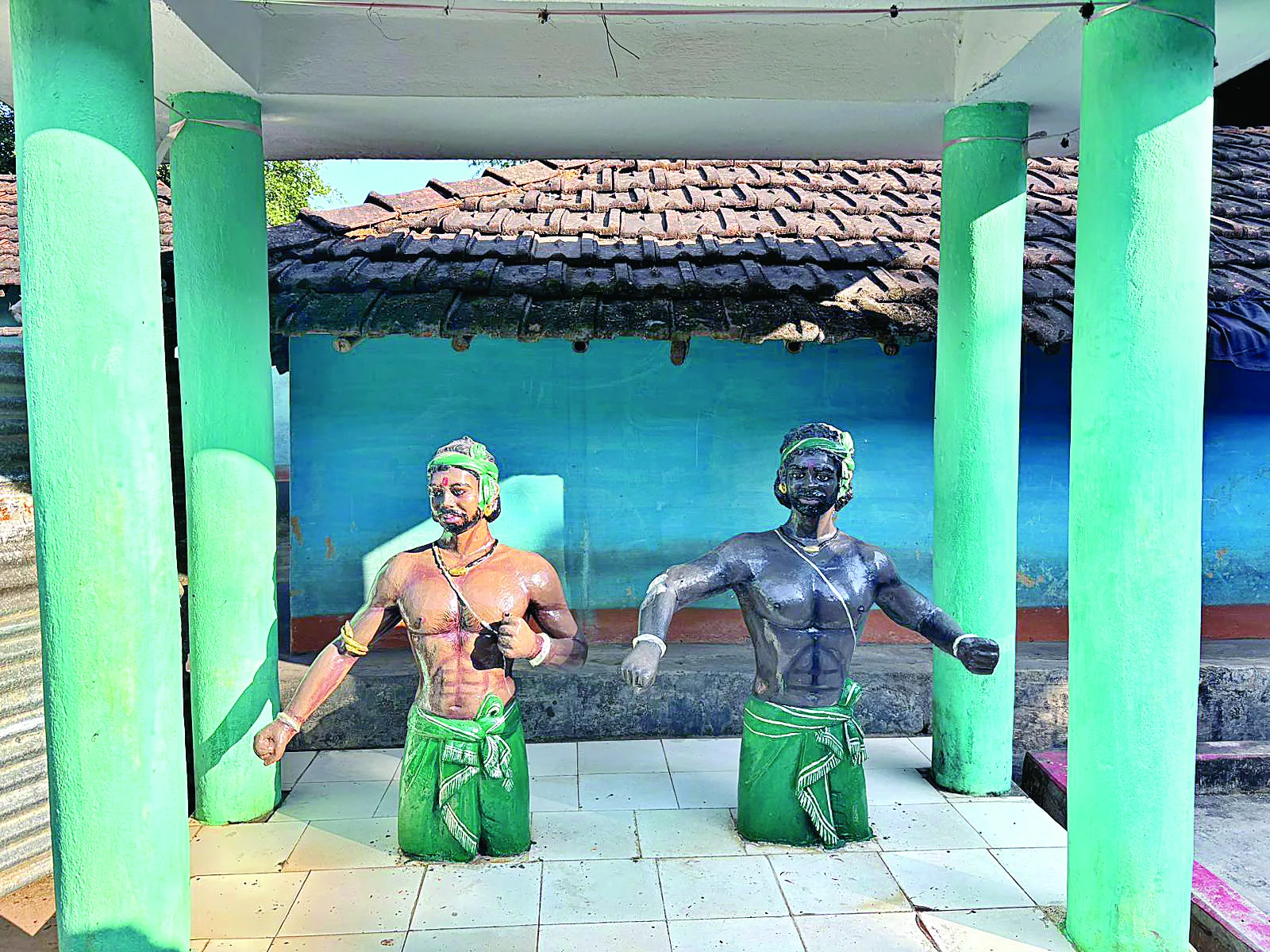
One poignant example of lack of basic infrastructure like proper roadways and street lighting remains a persistent issue in many rural areas is the village of Sido-Kanhu, legendary Tribal freedom fighters who led revolts against British colonial rule. Despite their historical significance, the village stands as a symbol of the State’s developmental neglect. Mandal Murmu, a sixth-generation descendant of Sido-Kanhu and also the proposer of incumbent CM Hemant Soren, shared his disappointment with the slow pace of progress. Initially a supporter of Soren, Murmu has now switched allegiance to the BJP, accusing Soren of using his ancestors’ legacy merely as a political tool while failing to bring about real improvements.
Murmu highlighted the persistent lack of basic amenities and job opportunities in his village. He also expressed concerns over a demographic shift, noting an increasing Muslim population that has begun to outnumber the original Tribal residents. For Murmu and many others, the lack of visible development and changing social dynamics have become key issues influencing their political choices this election season.
Missionary Conversions: A Changing Cultural Landscape
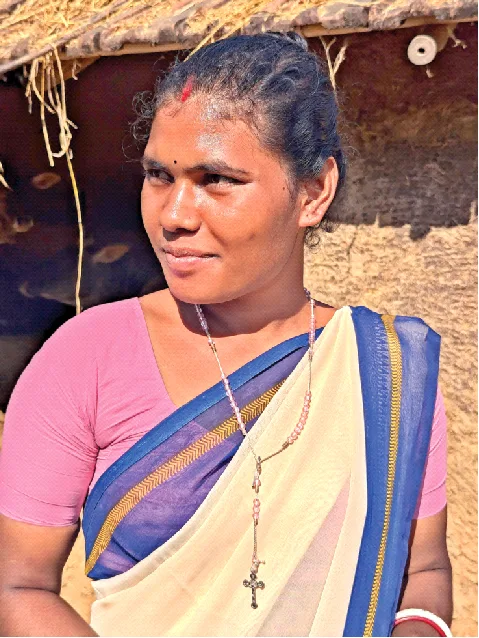
Even though the issue of illegal infiltration and settlement has taken centrestage during recent elections. Yet, a parallel concern—Missionary conversions—has not garnered the same level of scrutiny. This trend of religious conversion has become alarmingly widespread, with Churches now dotting the landscape from the rural plains to the remotest hilltops, leaving hardly any district untouched.
The State, which was carved out from Bihar in 2000, is not serving the purpose for which it was created. Whosoever wins the election, will have the dire job of fixing the loss faced by the Vanvasis in past decades – a challenge BJP claims, it is ready to take
Reports from various districts, including Garhwa, Palamu, Latehar, and Ranchi, reveal a stark transformation in the cultural and religious fabric of Tribal communities. Organiser team too observed a significant shift in traditional practices among the Tribals. Many villages that once celebrated indigenous festivals and worshipped local deities now see their residents attending church services instead.
The narrative of Kamli Korwa, a 70-year-old woman from the Korwa community, offers a glimpse into this shocking change. “We no longer worship our traditional gods or celebrate festivals like Sarhul and Deepawali,” Kamli shared. “We have left behind those practices because we are Christians now and believe only in Jesus.” She described her first visit to a Church, where she received financial assistance of Rs. 10,000. “Whenever I faced hardship, the church was there to help me.”
For many Tribals like Kamli, Christianity has become their primary religious identity, with their Tribal status now serving as little more than a social label. Traditional cultural and religious practices have gradually faded, signalling a loss of the unique cultural identity that was once integral to these communities.
As the trend of conversions continues to reshape the Tribal society, questions about the future of Jharkhand’s indigenous cultural identity have become more pressing. The State’s political and social stakeholders are now grappling with how to address this complex issue constitutionally.
A Deep Sense of Betrayal
Among Tribals
The Hemant Soren government is facing accusations of neglect, and in some cases, alleged complicity in enabling missionary activities. This perceived Government indifference has heightened the feeling of alienation within the State’s Scheduled Tribe (ST) communities. Tribal leaders and residents alike are questioning how a Government, led by individuals from their own community, could allow such a drastic erosion of their cultural and religious identity.
Beyond the issue of conversions, corruption within the Hemant Soren administration has become a major concern, especially among the youth. One Tribal youth claimed that the administration had accepted over Rs 5 crore in bribes from Government employees seeking preferential transfers. High-profile cases involving illegal mining and land encroachment have further fuelled public discontent, becoming a part of everyday conversations in urban areas.
However, as the Organiser team travelled deeper into Jharkhand, a striking contrast emerged. While corruption scandals sparked outrage in cities like Ranchi, the sentiment was notably absent in rural regions. For many villagers, the pressing issues revolved more around basic infrastructure, healthcare, and job opportunities, rather than the political controversies dominating urban discourse.
The stark difference in concerns between urban and rural areas highlights the complexity of Jharkhand’s socio-political landscape. In Mahuadanr village, we spoke with Chamri Nagasiya, a supporter of Hemant Soren’s Jharkhand Mukti Morcha (JMM) Government. Chamri expressed her satisfaction with the Rs 1,000 she receives monthly under the Maiya Samman Scheme, a gesture she believes underscores the Soren administration’s commitment to the welfare of her community. Her support for the CM runs deep, as she passionately voiced her frustration over his recent legal challenges, which she views as an unjust attack on a leader who, in her eyes, is being unfairly targeted. This perception of Soren as a victim—rather than a symbol of corruption—resonates strongly within rural and Tribal populations, where loyalty to the administration runs high.
The Rising Voices for ‘NRC’ and ‘Delisting’
In Garhwa, activists, who spoke on condition of anonymity, argue for the need for a National Register of Citizens (NRC) and “delisting” measures to address what they see as an encroachment on indigenous identities. They propose that individuals identifying as “Tribal Christians” must be forced to choose between their Tribal heritage and their Christian faith.
Activists have called for stronger laws to protect Tribal communities from exploitation.
A Do or Die Situation
For media houses probably, the elections in the State of Jharkhand is a normal affair – some political interviews, sensational news articles, seat sharing mathematics and the result day excitement. However, for the people of Jharkhand, this might be the last chance for them to save their asmita. The State, which was carved out from Bihar in 2000, is not serving the purpose for which it was created. Whosoever wins the election, will have the dire job of fixing the loss faced by the Vanvasis in past decades – a challenge BJP claims, it is ready to take. The real question is will illegal migration, corruption & conversion prove to be an electoral challenge for the JMM Congress alliance?